
Creating guitar music is one of the most powerful ways to add emotion, energy, and character to a track — but what if you don’t actually play guitar?
The good news is: you don’t need to.
Today, producers have multiple ways to create convincing guitar parts directly inside their DAW using MIDI, virtual instruments, and creative workflows.
In this guide, we’ll break down how to make guitar music without playing guitar — from simple beginner methods to more advanced creative approaches.
Why Guitar is Hard to Fake in Music Production
Guitar is one of the most expressive instruments in music.
Unlike piano or synths, real guitar performance includes:
- String-specific voicing
- Natural strumming patterns
- Articulations like slides, mutes, and dynamics
- Slight timing imperfections that make it feel human
This is why simple MIDI piano-style input often sounds unnatural when used for guitar parts.
But modern tools solve this in different ways.
Method 1: Use Guitar Sample Libraries (Beginner Friendly)
The most common way to create guitar music without playing guitar is using sample-based instruments.
These libraries include recorded guitar performances that are triggered via MIDI.
Pros:
- Easy to use
- Realistic sound out of the box
- Great for quick songwriting
Cons:
- Limited flexibility
- Can sound repetitive
- Often difficult to customize deeply
This method is great for getting started, but it can feel restrictive if you want more creative control.
Method 2: Use MIDI Guitar Tools (More Control)
Another approach is using MIDI-based guitar instruments that simulate how a guitar behaves.
Instead of just triggering samples, these tools attempt to recreate:
- String behavior
- Chord voicings
- Strumming patterns
- Performance realism
Pros:
- More musical control
- Better for composing original parts
- Works directly inside your DAW
Cons:
- Learning curve
- Still limited compared to real guitar performance nuance
Method 3: Build Guitar Parts from MIDI (Creative Approach)
If you’re comfortable working in a piano roll, you can manually build guitar parts using MIDI.
This involves:
- Writing chord shapes
- Arpeggiating notes
- Adjusting velocity for dynamics
- Adding timing variation for realism
This method gives you full control — but it can be time-consuming and difficult to make sound realistic without additional tools.
A Modern Approach: Designing Guitar Instead of Playing It
A new generation of virtual instruments goes beyond simple sample playback or MIDI triggering.
Instead of treating guitar as a static instrument, they treat it as a system you can design and control.
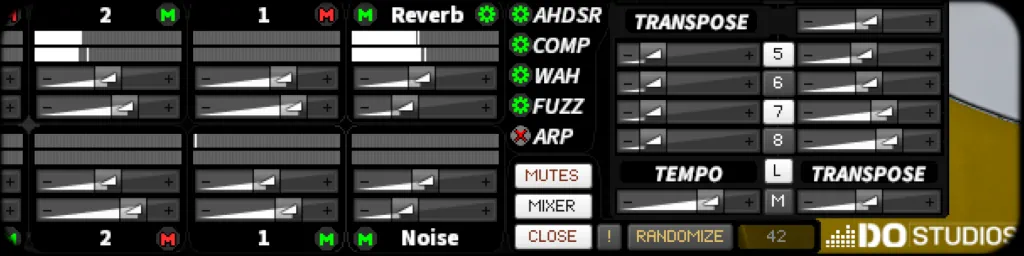
One example of this approach is Guitarocracy — a programmable guitar engine built for Native Instruments Kontakt Player.
Rather than just playing back guitar samples, it allows you to:
- Control individual strings and articulations
- Shape performance behavior with envelopes and modulation
- Use a scale-aware arpeggiator to generate musical ideas
- Randomize and evolve sounds instantly
- Visualize everything through a real-time fretboard
This means you’re not just triggering guitar sounds — you’re designing how the guitar behaves.
The Key Idea: You Don’t Need to Play Guitar — You Need Control Over It
Modern music production has shifted away from performance limitations.
Today, making guitar music without playing guitar is about:
- Understanding structure (chords, scales, rhythm)
- Using the right tools to translate ideas into sound
- Focusing on composition instead of performance technique
Whether you use sample libraries, MIDI tools, or advanced instruments, the goal is the same:
Turn musical ideas into expressive guitar parts — without needing to physically play the instrument.
Final Thoughts
You don’t need years of guitar training to create guitar-driven music.
With today’s tools, you can:
- Write full guitar parts in your DAW
- Experiment with ideas instantly
- Build complex, expressive performances using MIDI
The barrier between “idea” and “finished guitar track” has never been smaller.
Leave a Reply